


As of 2026, every player in the AI industry is in an arms race to reach the ultimate milestone of converting AI investments into profitability. Billions of capital expenditures are committed for the next few years, in addition to infrastructural commitments required to run the unprecedented amount of datacenter estate needed to house what the tech world hopes will be profitable AI solutions.
In this edition of the Recruitment Signals report, we took a sober look at the hard data available not only from official state bodies around the world, but also our own platform data; all to answer the question of “Is the AI hype deflating, or enroute to its intended destination?”
Key Highlights From The Report
AI Investments
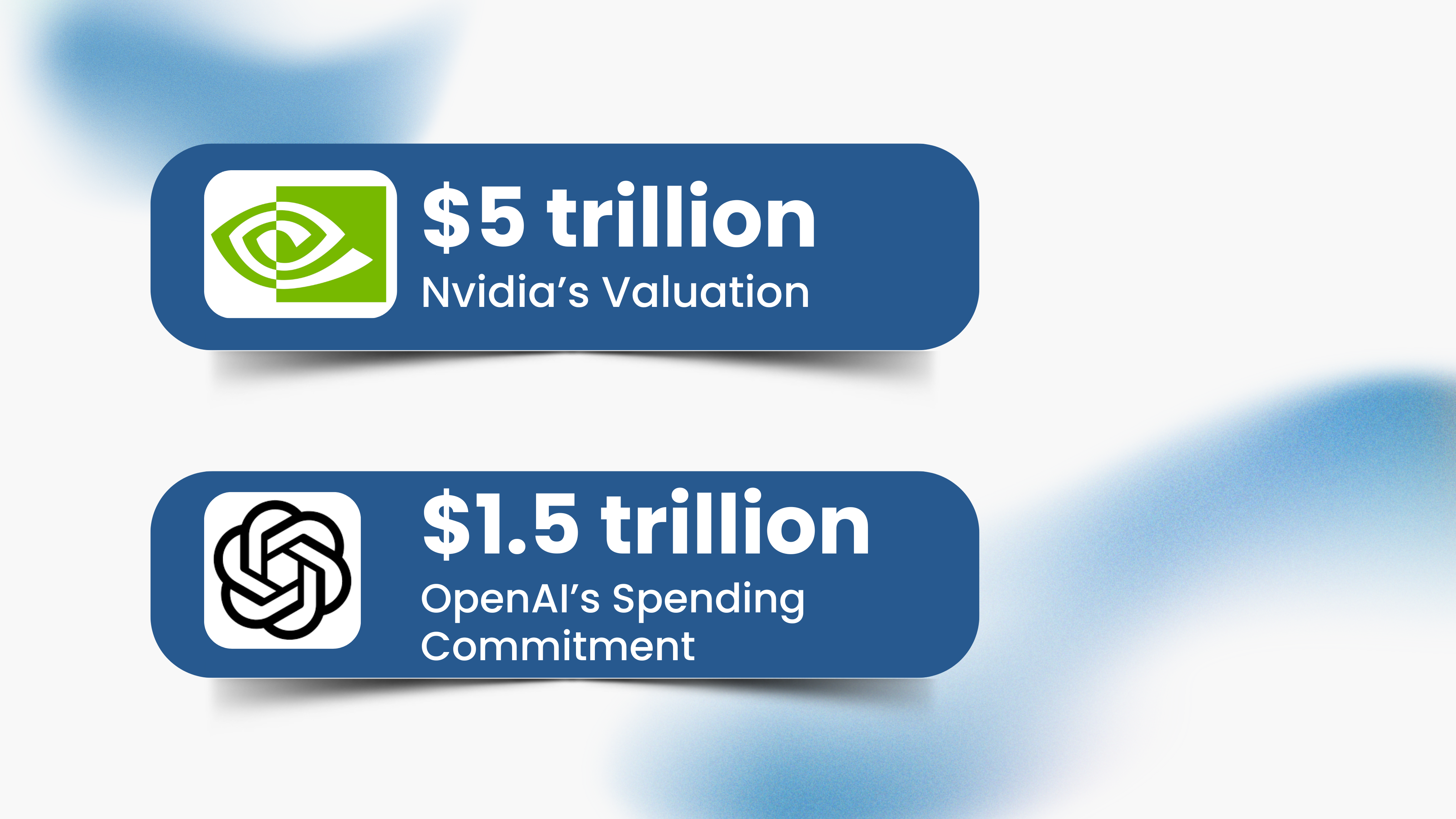
The first eye-watering numbers we look at are the biggest AI valuations industry right now. There’s Nvidia, arguably the biggest company in the world, profiting on the “sell shovels” business model, providing the vital skeletature that is running the compute engine of nearly all AI models and platforms. The chipmaker crossed the 5 trillion valuation milestone last year, after being the unrivaled provider of compute chips to AI datacenters worldwide.
The second player, arguably more controversial, is the trailblazer of the large-language-model AI movement: OpenAI. The company has heavy backing from industry giants such as Microsoft and even Nvidia. The maker of ChatGPT has faced fierce competition from players such as DeepSeek and Google. Despite facing this goliath competition, the AI research company retains the most widely used AI chat tool as of February 2026.
Is Anyone Even Using AI for Work?
AI adoption in hiring is no longer experimental — it’s standard practice. The 2025 AI in Hiring Survey by Insight Global found that 99% of hiring managers now use AI in some part of their recruitment process, from resume screening to candidate evaluation and stakeholder communication. At the same time, 98% report that AI has improved hiring effectiveness. However, adoption doesn’t mean full automation: 93% still emphasize the need for human oversight in the process. Complementing this, research from Boston Consulting Group shows that 70% of organizations experimenting with generative AI are applying it specifically within HR functions such as talent screening. Together, these figures show that AI is widely used — but still managed with human involvement.
Manatal’s Investment in AI
Coinciding with the aforementioned industry demand, Manatal was also at the forefront of deploying AI for recruitment software workflows to build the next generation of hiring strategies.. With cutting-edge AI innovations; including the first MCP server integrations with ChatGPT and other AI chatbots, an autonomous AI interviewer, and advanced recommendation algorithms, Manatal is currently the most fully featured AI-powered recruitment software on the market today.
The Current State of AI Demand
To evaluate whether businesses are truly continuing to invest in AI tools and infrastructure, the best metric to look at is the number of job postings for AI roles across multiple industries. We leveraged Manatal’s platform data, which aggregates job postings from 2500+ job boards across industries and regions, to map the trend of overall AI jobs over time as well as the functions being employed. Given that it takes months to fully onboard and rev up a new resource, and much longer to release a finished output into the market or into the hands of users, this gives us clearest picture of global businesses’ long term commitments to AI yet.
.png)
.png)
Insights For Workforce Leaders
AI is no longer limited to tech teams, it’s becoming a core capability across functions, from engineering to marketing and finance. While the hiring frenzy has stabilized, demand for skills in machine learning, data engineering, and natural language technologies remains strong.
The shift now is from rapid expansion to disciplined scale. Organizations are focusing less on experimental hiring and more on measurable ROI, real-world deployment, and long-term capability building. Leaders who prioritize targeted hiring, reskilling, and smart integration — rather than broad expansion — will be better positioned to sustain AI-driven growth.
Wrap-Up
Based on the data compiled in this edition of the Recruitment Signals report, the overall picture on the AI impact becomes clearer. The momentum with development and deployment remains strong, investments are at an all time high and the focus this year is a resounding magnification of infrastructure deployment, utility and ROI. For the recruitment business, the AI jobs data points to one of the fastest growing verticals in the tech sector, and is only gaining momentum despite short-term headwinds.
.png)


.webp)

.webp)

.webp)


.png)


